We left Black Canyon on Sunday, three days ago. I’d hoped to write another post before now, but what with my last post being a couple of days late and busy days here I haven’t had a chance!
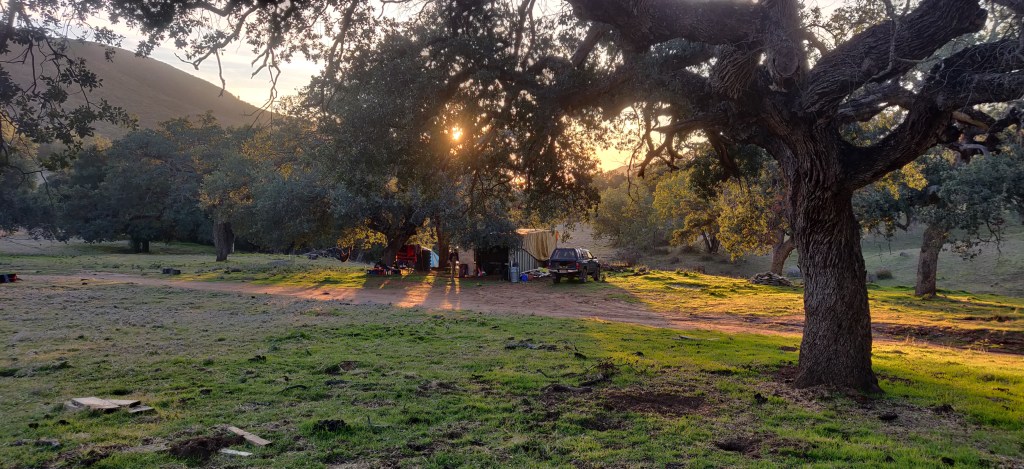
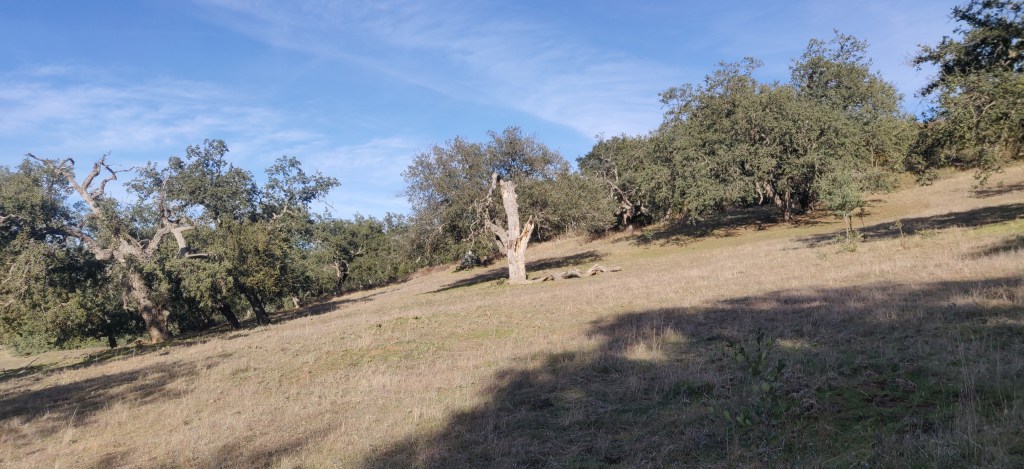
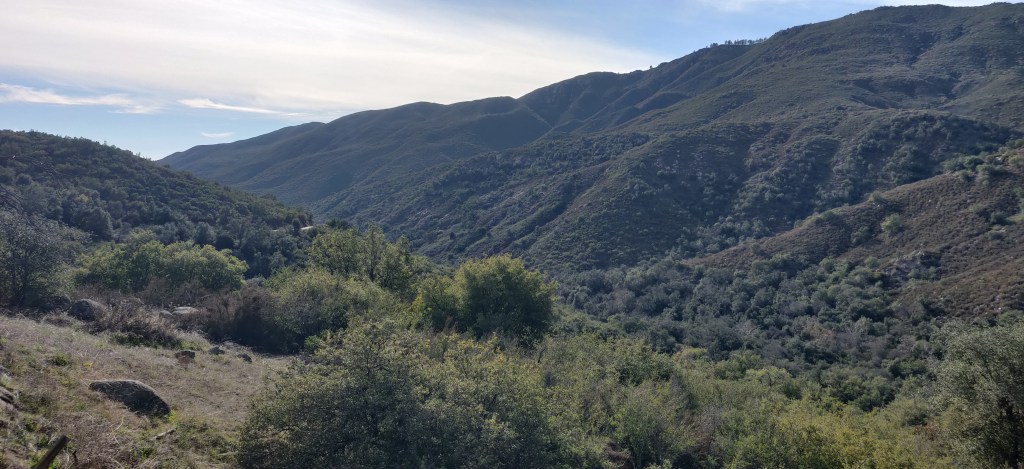
The Black Canyon Project is based on a site in the hills to the east of San Diego county. As with many properties in the USA, the boundaries are completely rectangular and don’t take any account of physical geography whatsoever. The 120 acre site lies in a bowl at the top of the catchment of the Santa Ysabel Creek, which drains ultimately into the Pacific. To the west, down the valley, is a reservation for the Mesa Grande Band of Mission Indians, the Kumeyaay tribe. The land to the east and south is also reservation, and the land to the north is owned by various private individuals. The Black Canyon Project site is owned by a private individual who aims to use the land for two main aims: restoring the watershed using natural methods, and education. The site is notable for its ecology, which represents a vanishing biome – mountainous Englemann oak forest. It’s vanishing because the geography required by the ecosystem is exactly the geography required by the spreading housing estates of Southern California’s coastal metropolis.
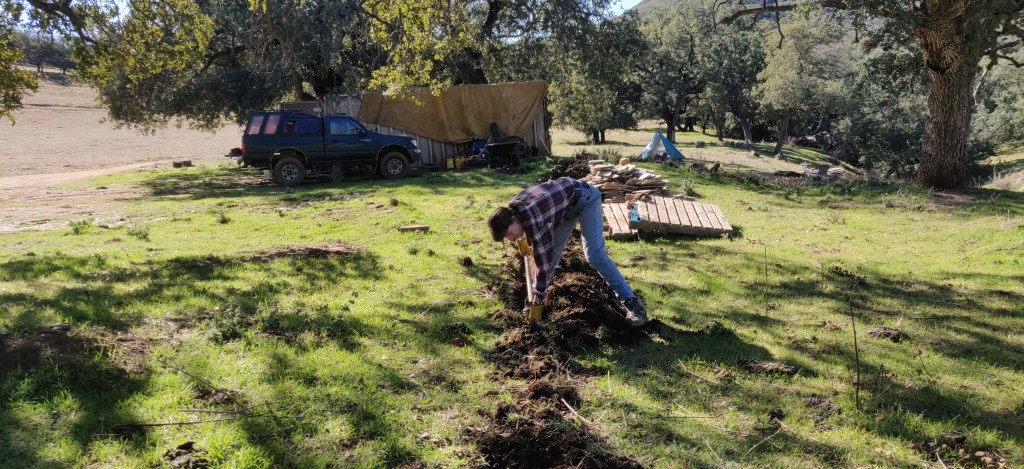
When we arrived, there was a shipping container, a long-drop toilet and two tents – one for us, and one for Charles, the site manager. His mum is a Hunt so we may be distantly related! The weather in Southern California at this time of year is similar to that of a British Spring or late Summer; 15°C – 20°C, but dropping down to near zero at night with no cloud cover. Charles is an expert in hydrological systems and has been restoring the antiquated system of tanks and pipes on the site (an old ranch), so we were helping out by digging ditches, monitoring the 1950s oil-derrick-esque well pump and creating a shower, which is fed by very cold water from an aquifer under the mountain. We were promised hot water before we arrived, but this didn’t come to pass and we were reliant for the week on heating water on the gas stove and washing from bowls, which was perfectly tolerable in this climate, even with the heavy work.
We visited a couple of local towns, Julian and Ramona, both very American but quite nice places with a few interesting shops and ‘historic’ monuments. We didn’t manage to get a proper walk in due to time constraints which was disappointing – the top of Black Mountain apparently has some spectacular views across Southern California.
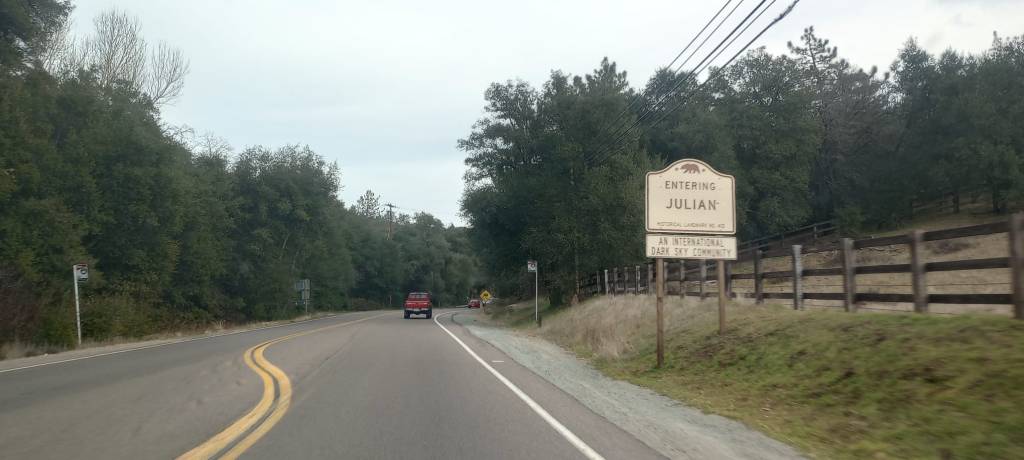
In the last two days it went downhill. The weather came in hard – when it rains in this part of the world, it really rains. As we didn’t want to be stranded up the mountain before we had to drop off the hire car, we decided to abandon our original plan and stay in Ramona the night before heading down to the Mexican border. The track wasn’t great at the best of times and we ended up with a puncture so had to change the tyre to a space saver and creep slowly down the mountain back to the main road. We stayed in Ramona the night (hot showers and a roof!) and then left for the Mexican border.
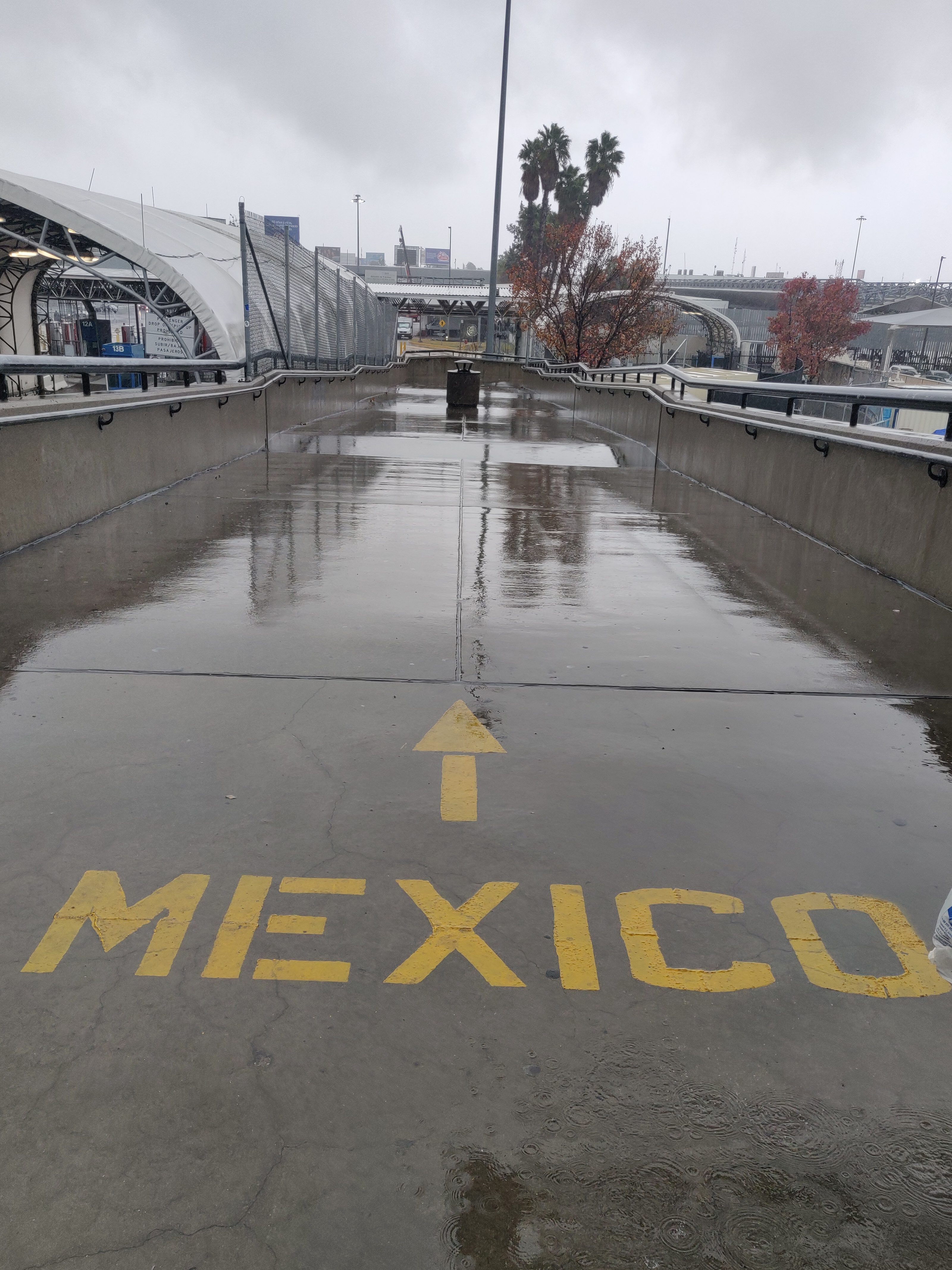
We’ve just arrived in a village called El Rosario, a way down the Pacific coast of Baja California, for our second night in Mexico. We crossed the border on foot in the same torrential rains and just avoided serious flooding in San Diego. I also exhausted my first bag of English tea and am now on my emergency bag.
More on Mexico in the next blog – shantytowns, Mexican driving, military roadblocks and Baja California…
 JH Woodcarving
You are running out of tea? That sounds serious.
LikeLike