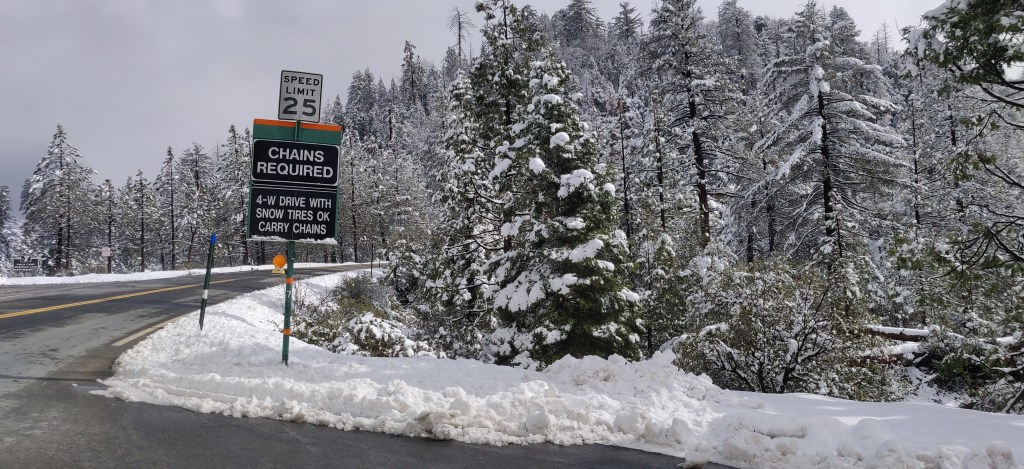
We’re now in San Francisco.
It’s been longer than I’d planned since my last post, as we haven’t had much breathing space. Lots has happened so I’ll put it all into a couple of posts so they’re not overlong.
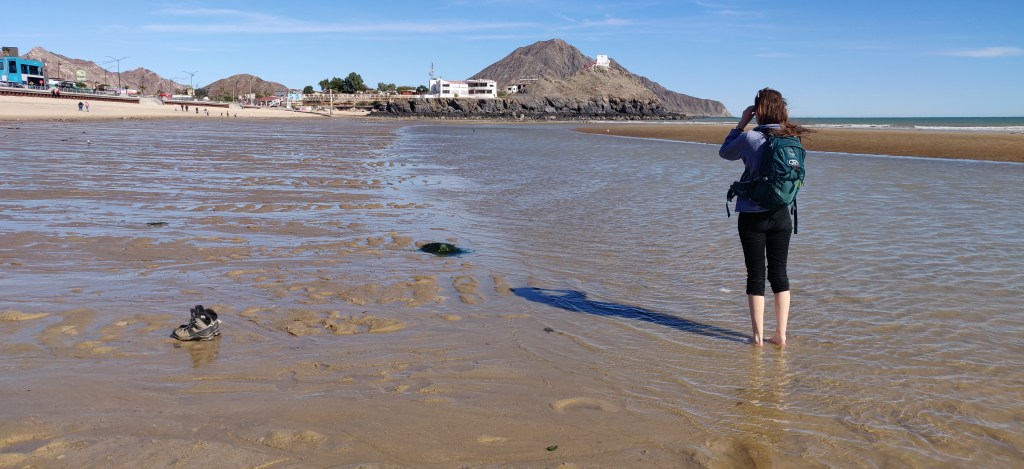
Our last two nights in Mexico were pretty uneventful – we travelled up the east coast of Baja California ((BC) – though that might become confusing later on) on the Sea of Cortes and stayed in a ramshackle apartment in a resort town called San Felipe. Lots of tourists from the USA go there, though I really couldn’t see why beyond it being cheap. As with most of BC, San Felipe feels sad and tired, with little industry besides that provided by rich tourists. There’s some fishing industry but most of the newer infrastructure in San Felipe is focussed on a short seafront with bars connected to new exclusive apartment blocks. Between these are dirt roads and slum-like dwellings. The coast is quite impressive, but there aren’t really any ways to access it outside of the towns as it all seems to have been bought up as huge resort lots with ‘no trespassing’ signs set along fences.
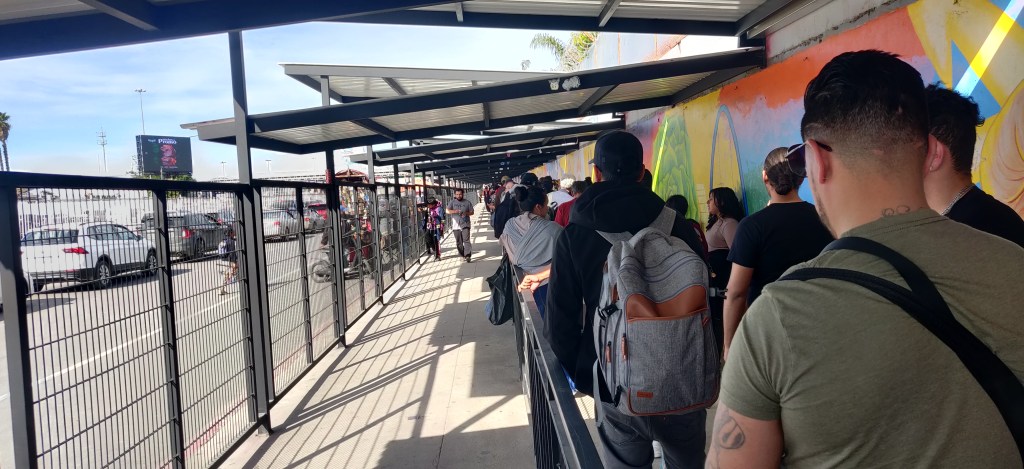
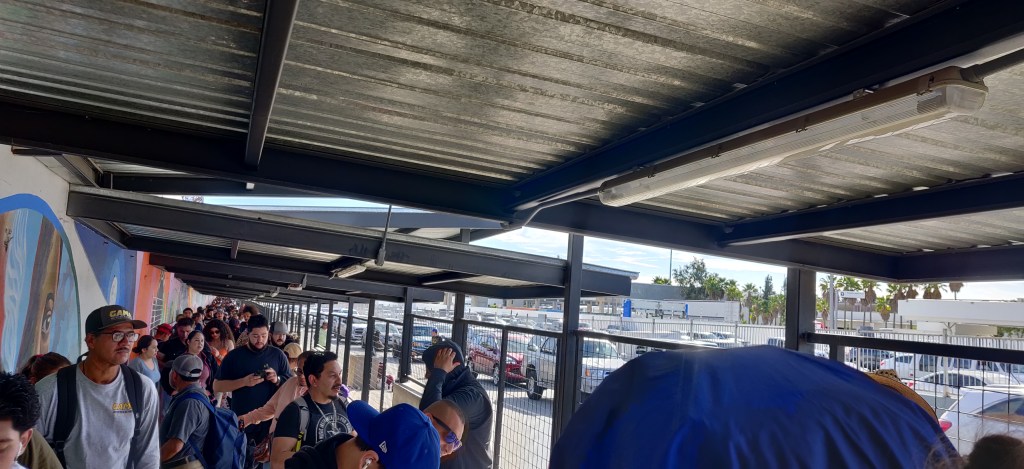
We crossed the border back into the USA by foot and had a very different experience to crossing the other way, when we just walked straight through with no crowds and no passport checks. The crossing time varies hugely based on the time of day and the weather, and it’s always much, much easier to cross from the US to Mexico. Early in the morning and around 6pm are busy times as people are crossing the border for work. We crossed on a Sunday afternoon, so assumed it wouldn’t be too busy – we were wrong. We used the same Otay Mesa crossing we’d used to enter Mexico, and joined the queue about 200m back from the border. We were the only non-Mexicans; there’s a parallel line for US passport holders, who can walk straight through with minimal checks, and we had some funny looks from people around us who were presumably wondering why we weren’t using the other queue. After about an hour and a half they let a group of about 15 of us through into a small compound where we waited for our passports to be checked and let through.
When we told the immigration officer we were travelling to Canada she asked us if we were Canadian, despite the fact that she was looking at our passports and had just established that we were from the UK. As a general observation, Americans seem very easy to confuse, particularly if you tell them something they’re not expecting to hear or go off-script. It’s probably my impenetrable accent.
A day later we picked up our camper from LA and hurried as fast as we could to leave the city again. The camper was a van conversion (a Thor Tellaro if anyone’s interested), 6.7m (22′) long. We had gas and electric powering water, a stove and a heater. The internal design wasn’t ideal – the toilet/ shower was at the back and the bed folded out in the middle, making the toilet very difficult to access once the bed was out and sitting on its flimsy brackets. Most of the power sockets didn’t work and later on, once it started raining, we discovered two leaks in the roof.
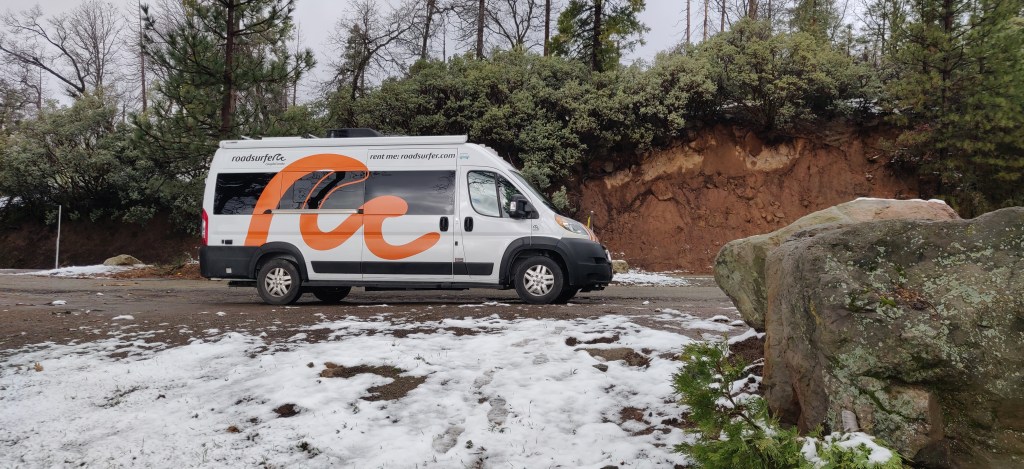
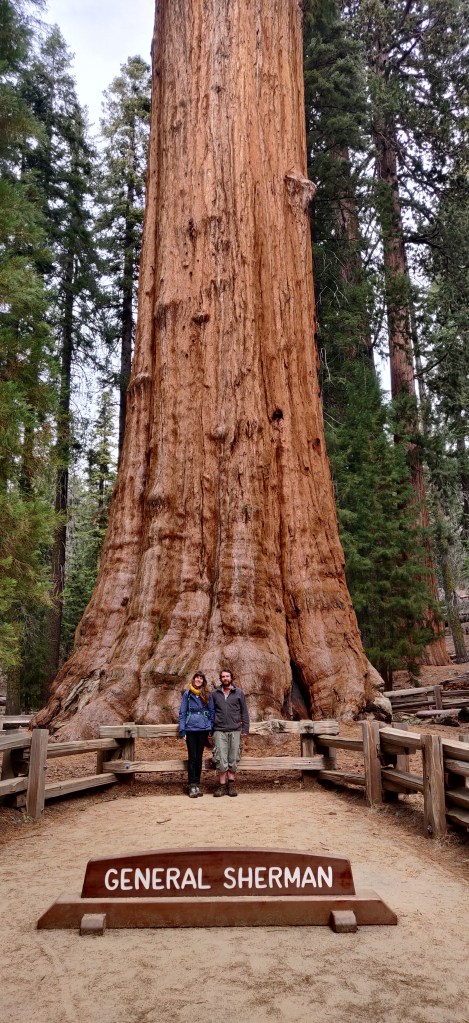
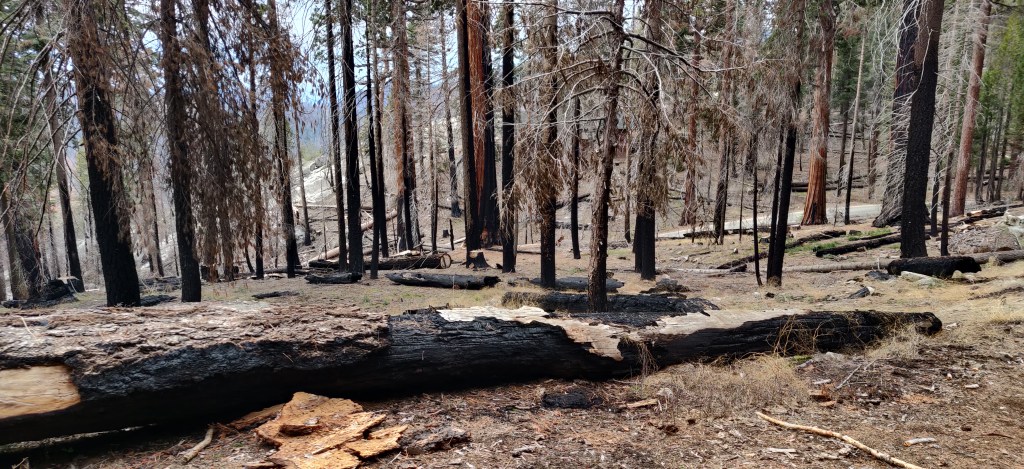
Nevertheless, the camper did its job and over the next 11 days we managed to cover a lot of ground. I think the Californian weather over the last week or so has even been on the news in the UK – very heavy rainstorms, high wind and snowstorms in the mountains. We had planned to start at Death Valley, just to the east of the southern end of the Sierra Nevada, and then head into the mountains. Because of the forecast, we changed our plan and decided to drop Death Valley and head north into the mountains before the bad weather was due in two days time. We went to Sequoia National Park and saw General Sherman, the largest tree in the world by volume. A giant redwood, GS is thought to be around 2,500 years old. The main stem alone has a volume of nearly 1,500m3. Compare this to the UK, where a conifer considered to be large might just have a main stem volume of 3 or 4m3. I hadn’t realised before going that GS was situated on a small plateau on top of a mountain at just over 2000m – large trees in the UK tend to be at lower altitudes and in sheltered valleys. When you see it, it’s clearly huge, but as it’s in a forest surrounded by other giant redwoods its size doesn’t really compute at first. The giant redwoods are dominant but they’re surrounded by white and red fir, sugar and ponderosa pines, and incense cedar. Even large specimens of these other trees seem tiny in comparison – it really gives a sense of perspective and it’s impossible to convey in photos. Immediately noticeable as you drive up the General’s Highway is the fire damage everywhere, dating back decades. The last couple of summers have been bad for big forest/ scrubland fires in California, though it’s not obvious anywhere but woodland. The redwoods get seriously scorched but seem not to be mortally damaged, whereas (at least in the bigger fires) pretty much everything else dies and a huge green flush of vegetation appears a year or two later.
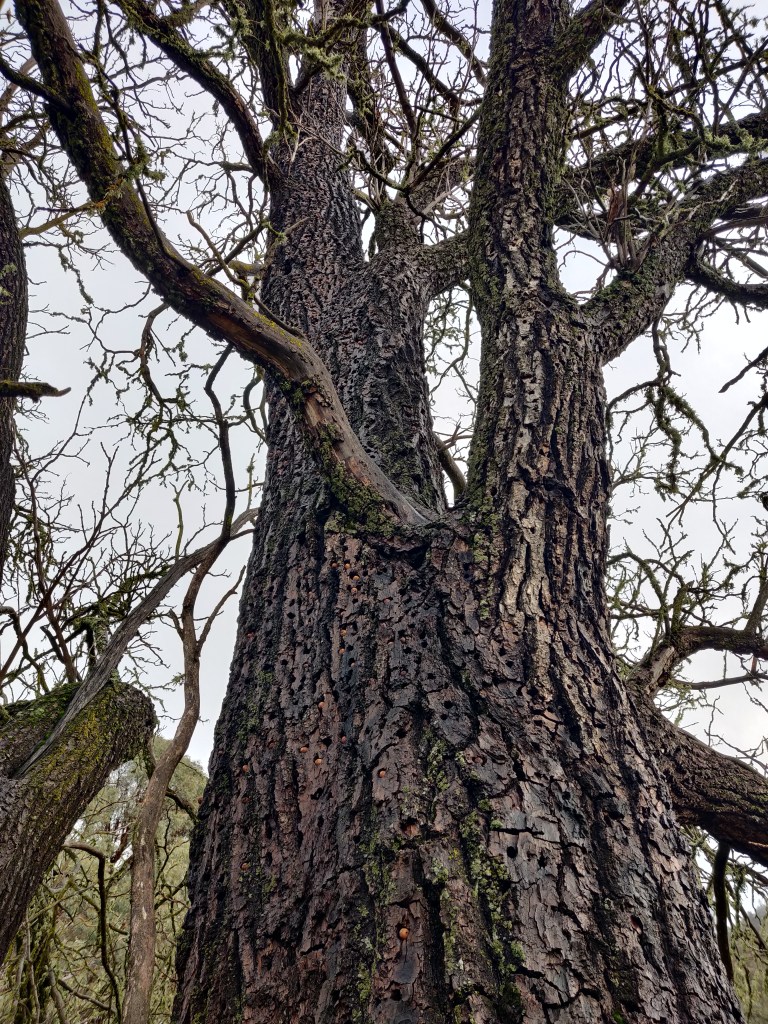
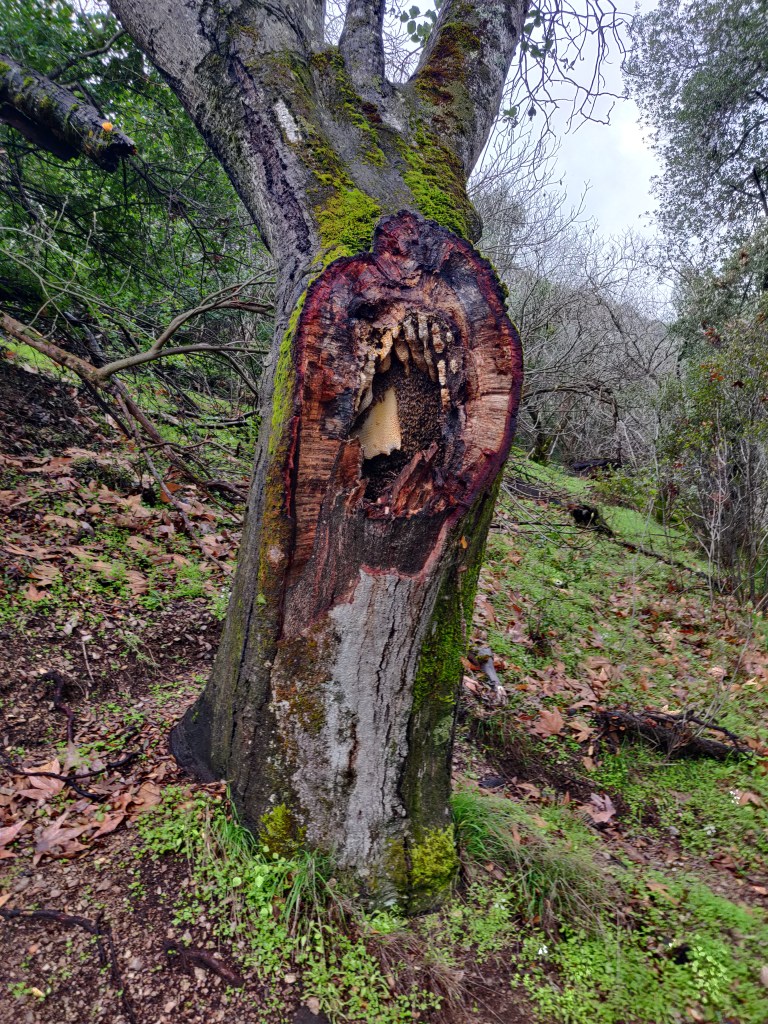
The wildlife here is very tame – in National Parks in the US, you’re not allowed to leave the path and animals seem to know this. Deer, groundhogs and woodpeckers will sit quite happily a couple of metres away from you. In several instances, deer have actually walked towards us, completely unfazed. We’ve seen mule deer, Californian condors, raccoons, various iridescent blue jays, turkey vultures, turkeys, and a huge bee nest in a tree at eye level. There are acorn woodpeckers everywhere, which collect acorns and create small cavities all over a tree trunk to keep them in.
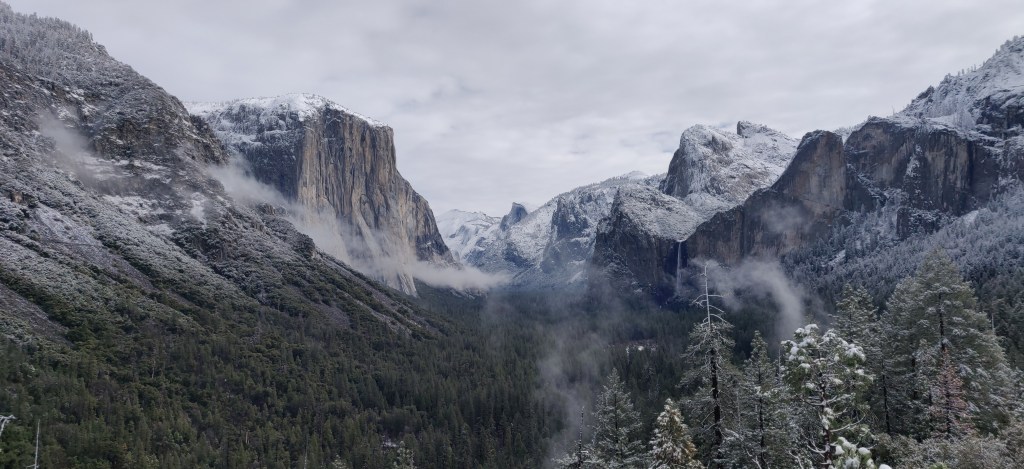
We went to Yosemite, the second most spectacular place I’ve ever been, the first being the Norwegian fjords. As the weather was coming in, only Yosemite Valley was accessible – all the footpaths from there head straight up the mountain and you’d quickly be blocked by snow. El Capitan is very impressive – a 1000m sheer cliff face. People climb it and camp on the way up with tents suspended in mid-air from the rock face. We weren’t interested in doing that ourselves!
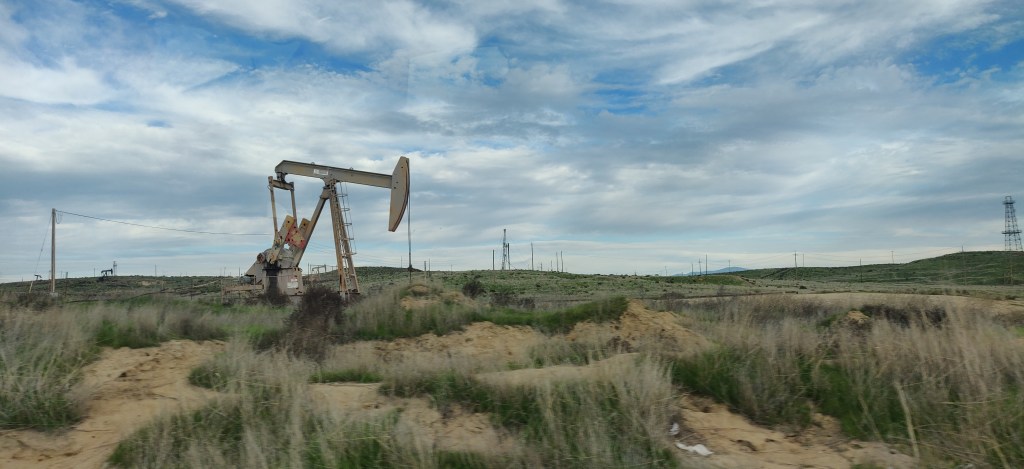
At this time, an ‘atmospheric river’ was entering the sky above Los Angeles and the weather was going a bit wild. We’d only stayed one night in each place and driven for hours every day so we decided to stay somewhere for a few nights to recuperate. We went to The Pinnacles National Park, a small NP and one of the newest, it only having been made a NP in 2013. To get there we crossed the Central Valley, the bit of California between the coastal mountains and the Sierrra Nevada. It’s completely flat and dedicated almost entirely to arable farming and oil production. There were high winds when we crossed, and there were orchards with trees ripped out of the ground, fallen telegraph poles and blown-off roofs all over the place.
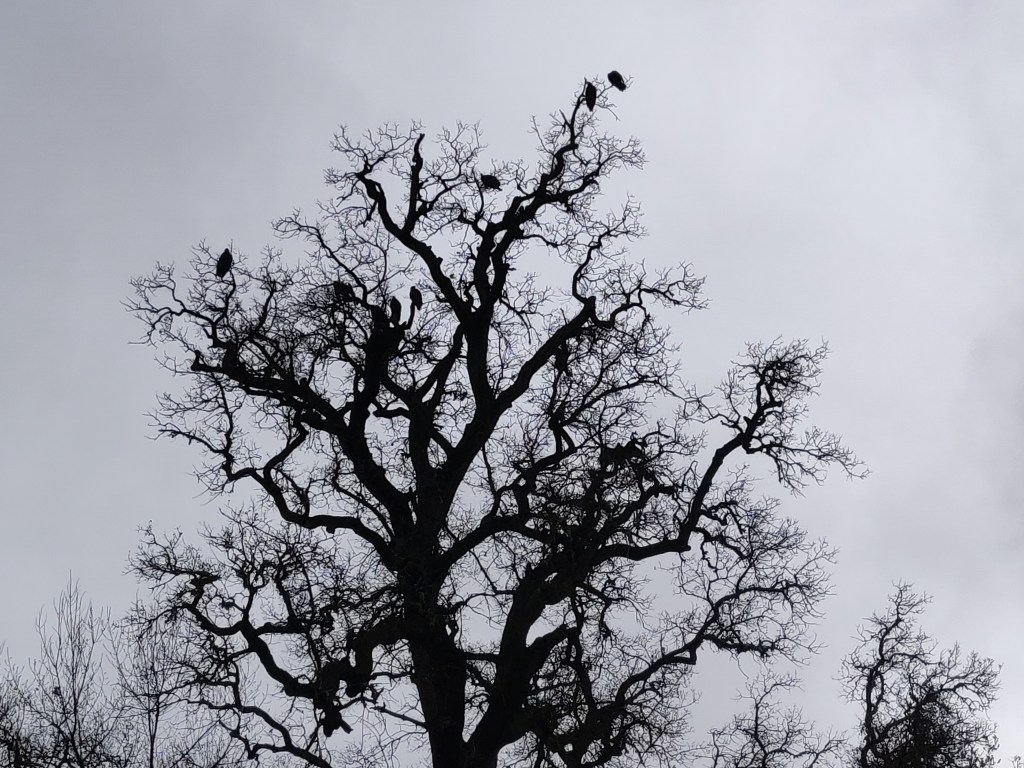
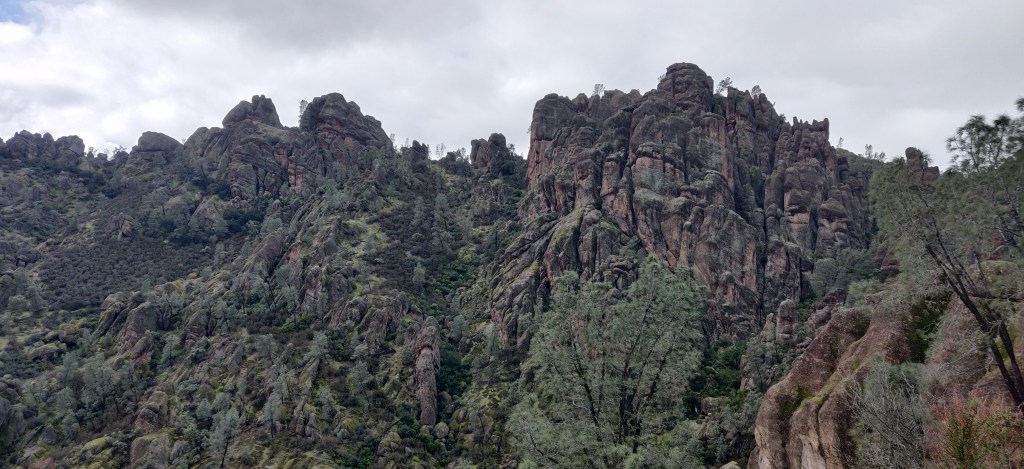
The Pinnacles is a bit like a British National Park – smallish, calm and not particularly high or impressive by American standards. It was also raining most of the time, which reinforced the British comparison. This is where we saw the Californian condors, a species which nearly became extinct and has now been revived. Most of them live in The Pinnacles – named after the weird rock formation formed by the subduction of the Pacific plate under the North American one (or it might be the other way round, I can’t remember).
After The Pinnacles, we stayed near Bakersfield in a non-descript place half way to LA to drop the camper back and pick up our next vehicle. The best thing about that was never having to go back to LA again. That was three days ago and I’ll continue in the next post, whenever that might be. I’ve also missed out a few bits we did which I might describe in future posts…
 JH Woodcarving