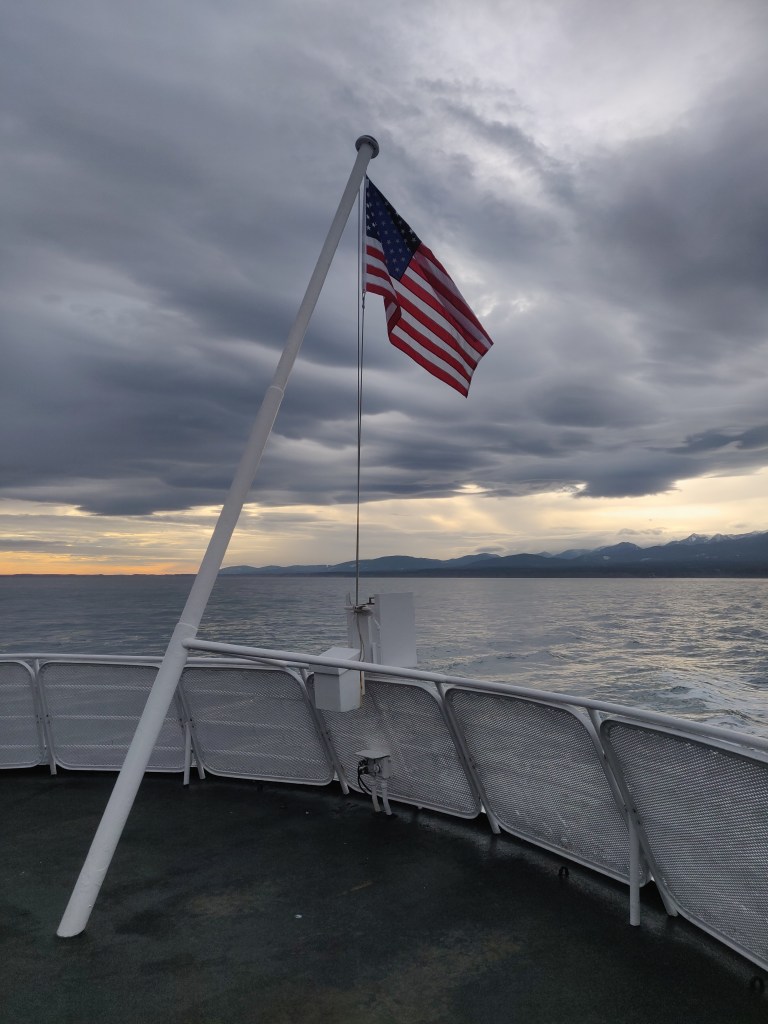
We left San Francisco under a cloud, metaphorically and physically. As we crossed the Golden Gate Bridge there was no visibility beyond 300m – something the Bay Area is famous for in the morning. As a result Alcatraz wasn’t visible, though we saw a few points from Dirty Harry, which we’d watched by way of research.
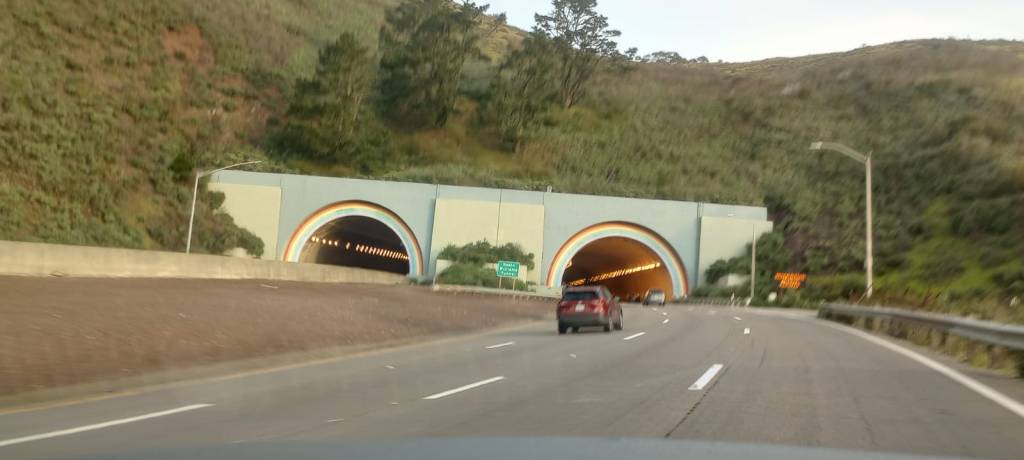
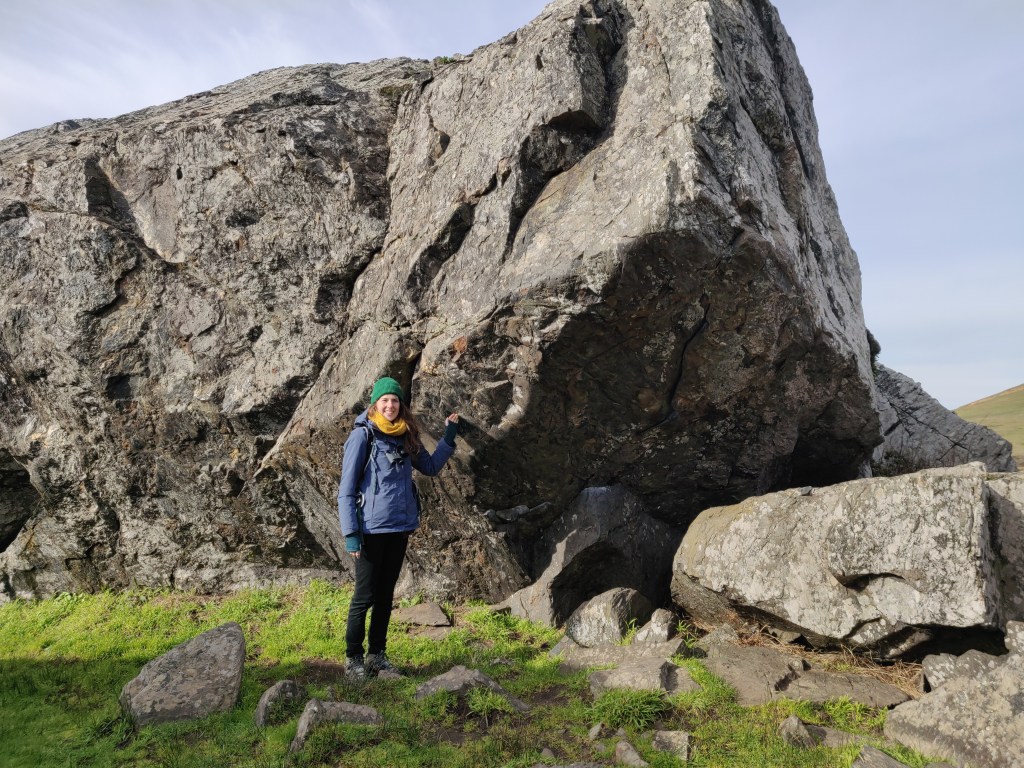
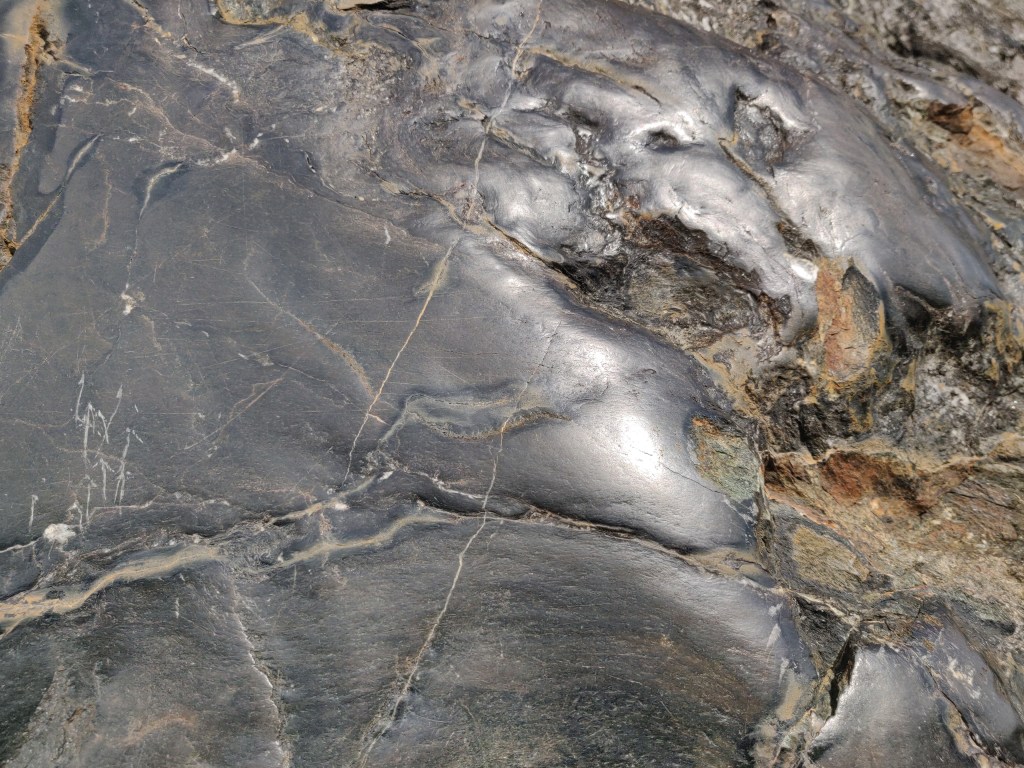
Our first stop after SF was an interesting point on the coast which wouldn’t have been out of place in South West England – the Mammoth Rocks. This is a group of huge rocks resembling tors by the coast with a curious smooth rubbed surface about 2-3m from the ground. These featured in a recent BBC documentary and experimental research using large ruminants has concluded that the rub marks were likely made by mammoths scratching themselves over millennia, 10,000+ years ago.
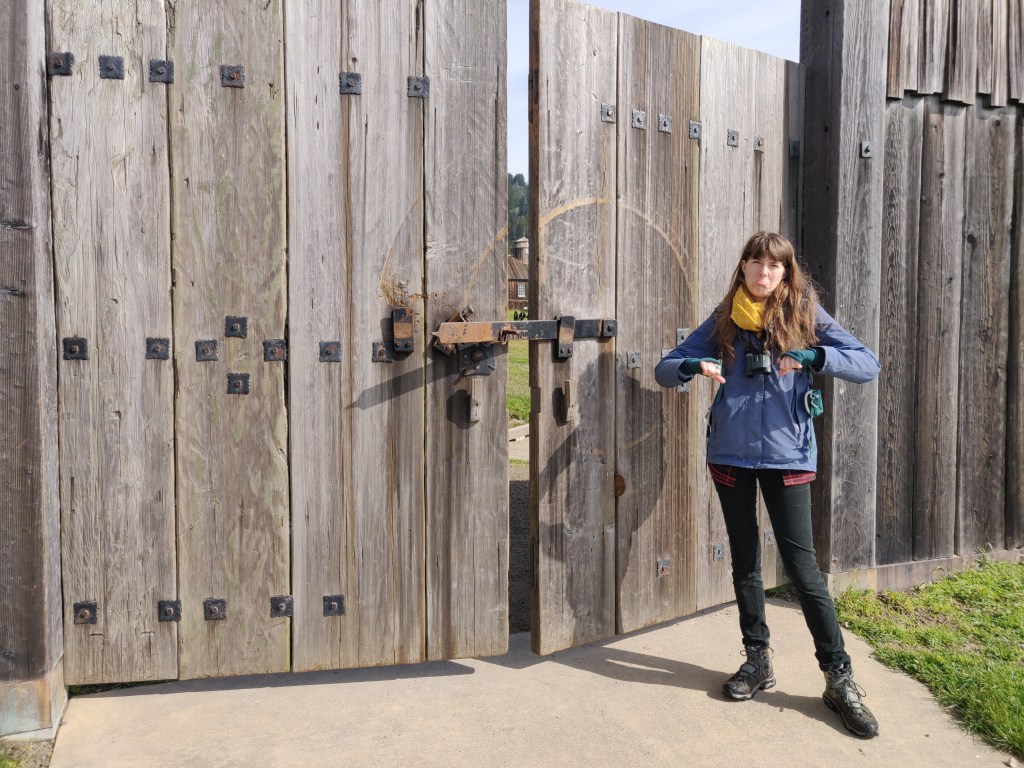
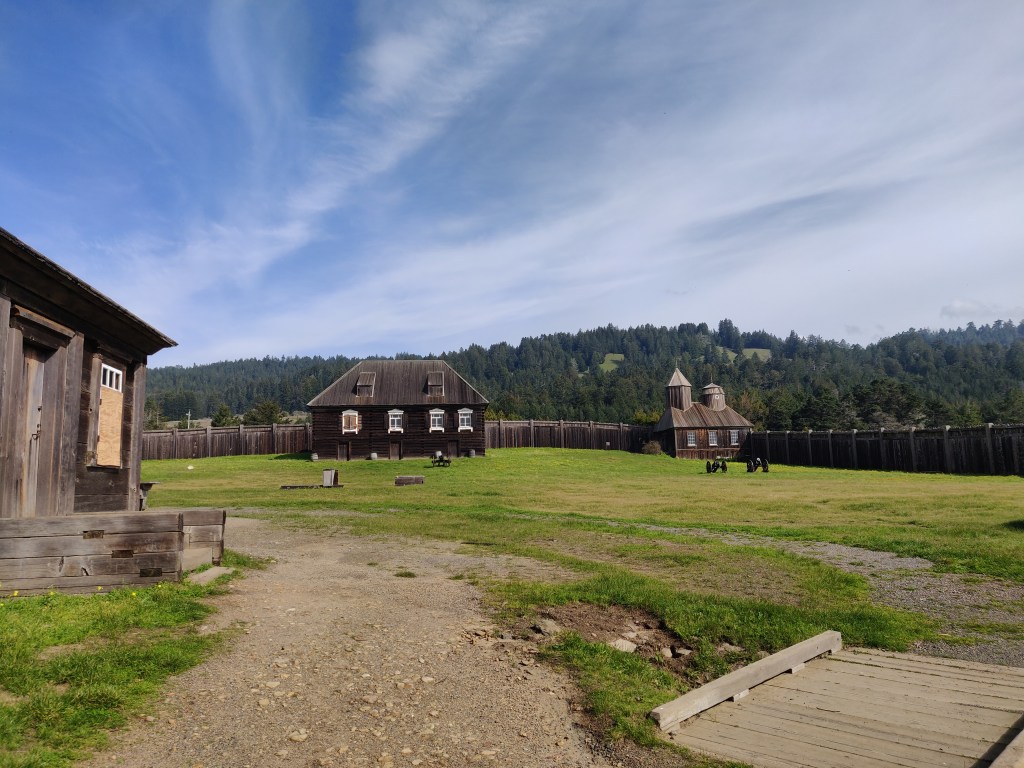
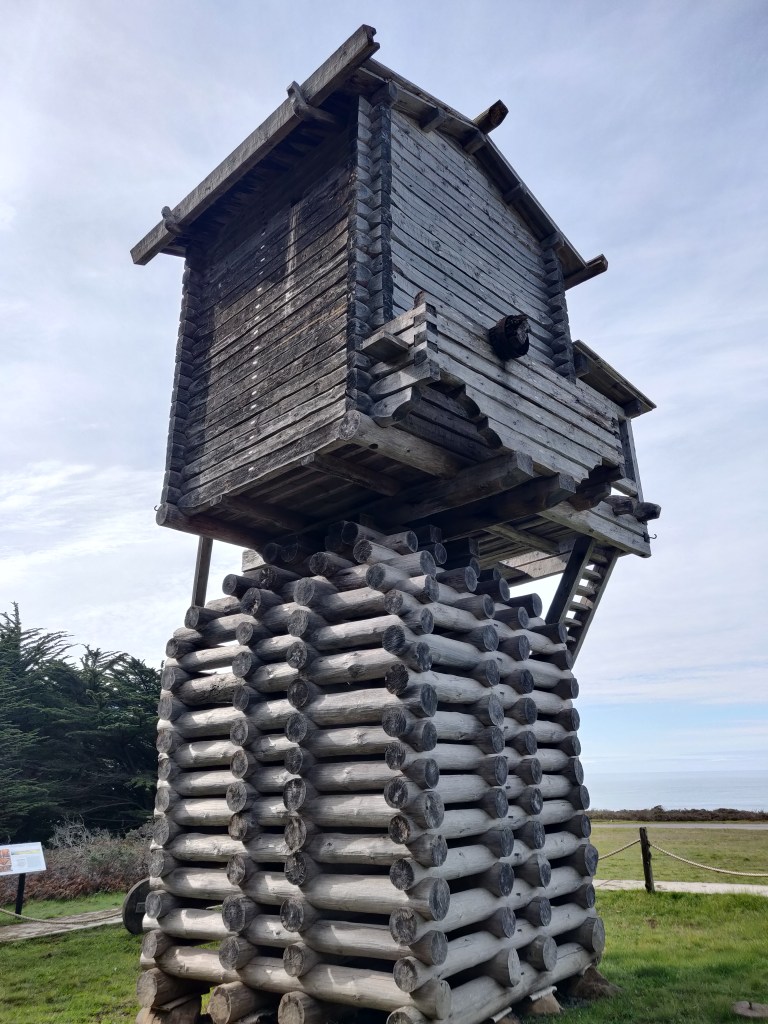
Heading North again, we came to the southernmost point of Russian America – Fort Ross (from Rus’, or Russia). Unfortunately it was closed and as it’s a fort it was difficult to break into so we just walked around the outside. They have one of the biggest eucalyptus trees I’ve ever seen there. The replica fort was constructed in the 1920s and it looks like traditional techniques of hewing and joining were used. We’d paid the full entrance fee into a trust box before going in with no indication that the fort was closed, so on the way out we fished out our payment with a piece of wire.
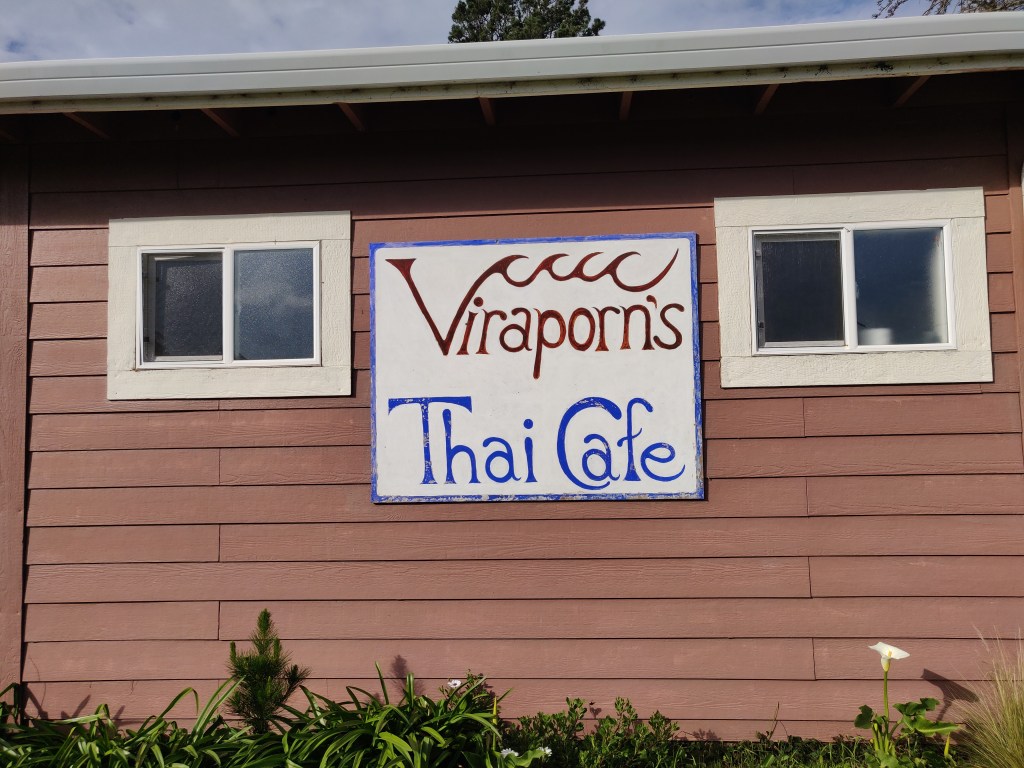
When I first went to Norway in 2009, I’d met a man who owned a Thai restaurant just north of Fort Ross. We’d checked that it was still running and had planned to eat there and stay nearby. However, when we got there it was semi-closed. I contacted the owner, Paul Lobell, but I’ve no idea if he’s still there or even still alive – maybe someone reading this could let me know.
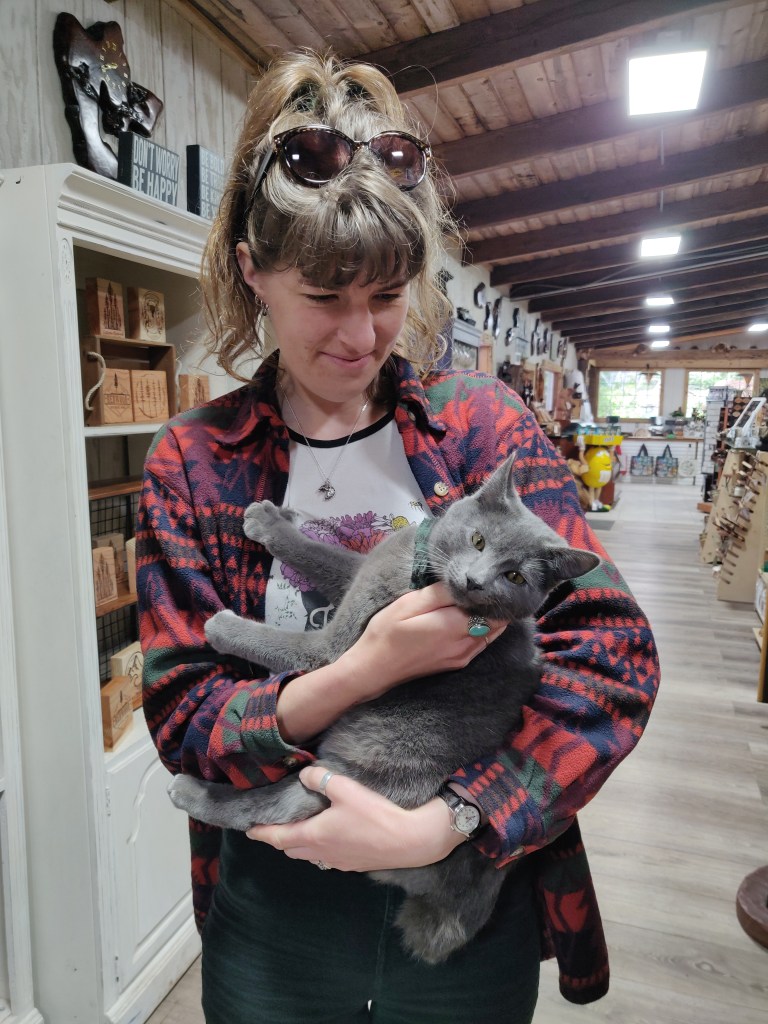
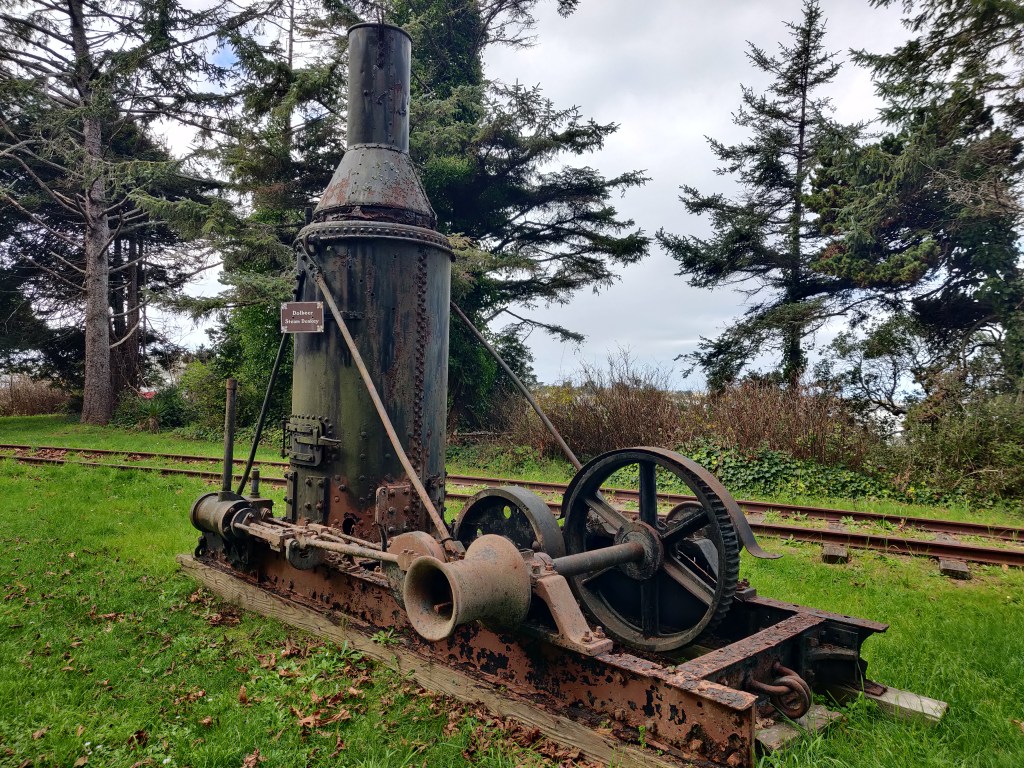
Northwards again and into redwood country. We met a very friendly cat and some interesting old forestry machinery. Instead of the giant redwoods we’d seen in Sequoia National Park, these were the coast redwoods which include the tallest tree in the world. Unlike General Sherman, the largest tree in the world by volume (and therefore difficult to hide), the tallest tree in the world – Hyperion (at least 116m) – is not accessible or even easily findable by the public. General Sherman is 84m tall and has a diameter of 11m, but the taller and much more slender Hyperion is far more susceptible to damage by ill-meaning members of the public and so its exact location is kept secret.
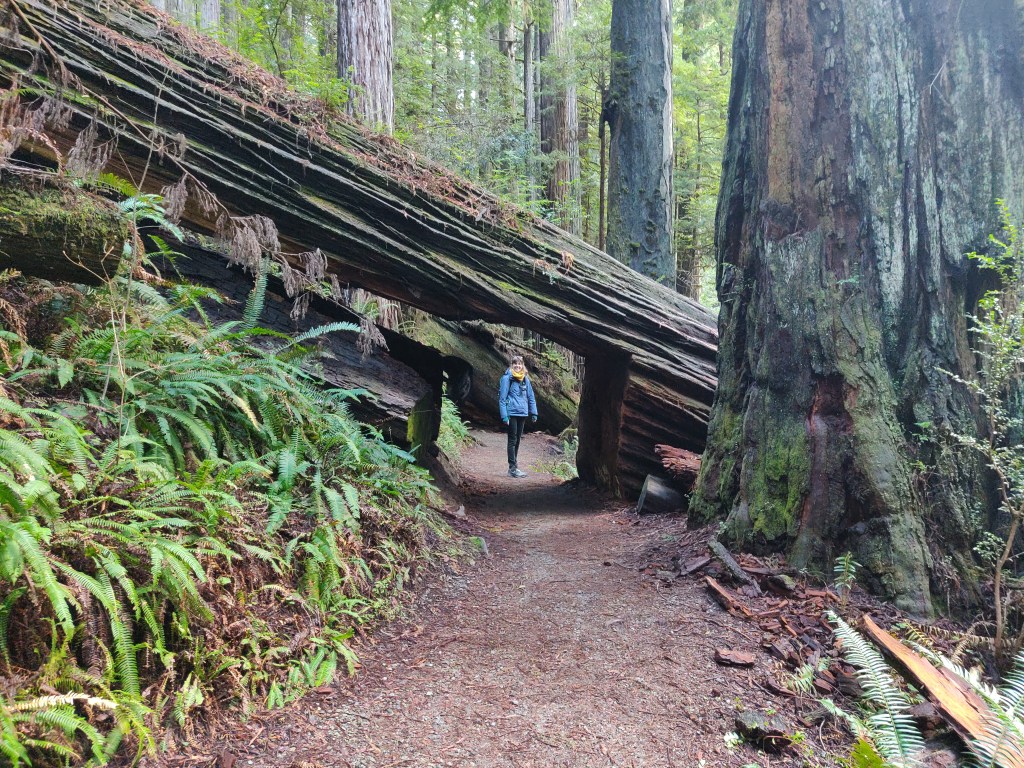
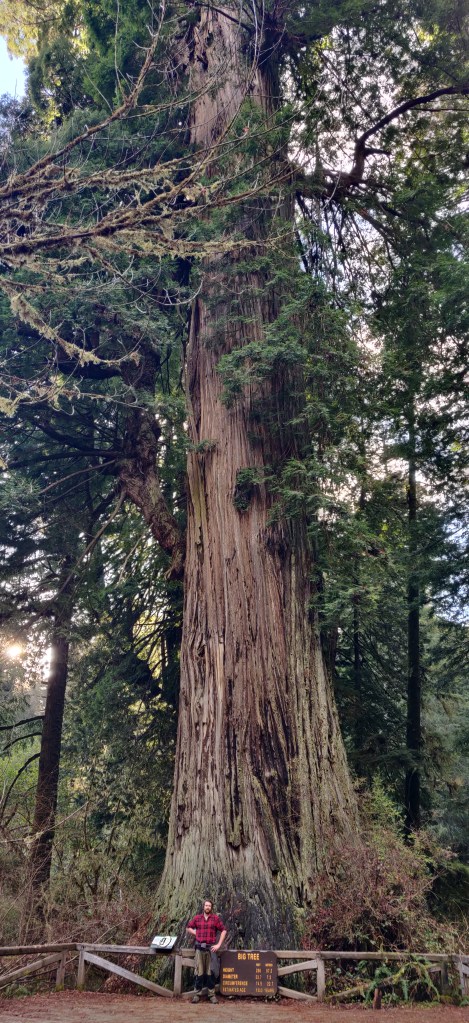
Though they’re smaller in mass, I found coast redwoods to be far more impressive than giant redwoods. They dominate their habitat and so their scale is clear and obvious. When you walk around the Redwood National Park, the forest is messy and untouched – if it wasn’t for the National Park trackways, the fallen trunks and vegetation everywhere would make the forest almost impossible to access.
We saw some Roosevelt elk close up. What are called elk (Cervus canadensis) in North America are really closer to what we’d call red deer in the UK (Cervus elaphus). Concurrently what are called elk in Europe (Alces alces) are moose (also Alces alces) in North America. In the NP Centre, they had an interesting example of a (NA) elk which had got its head stuck in a tree trunk and died, with its skull being subsumed into the wood. We also saw a reconstruction of a traditional native Yurok village, with round entrance holes into buildings which are big enough for a person but too small for a bear.
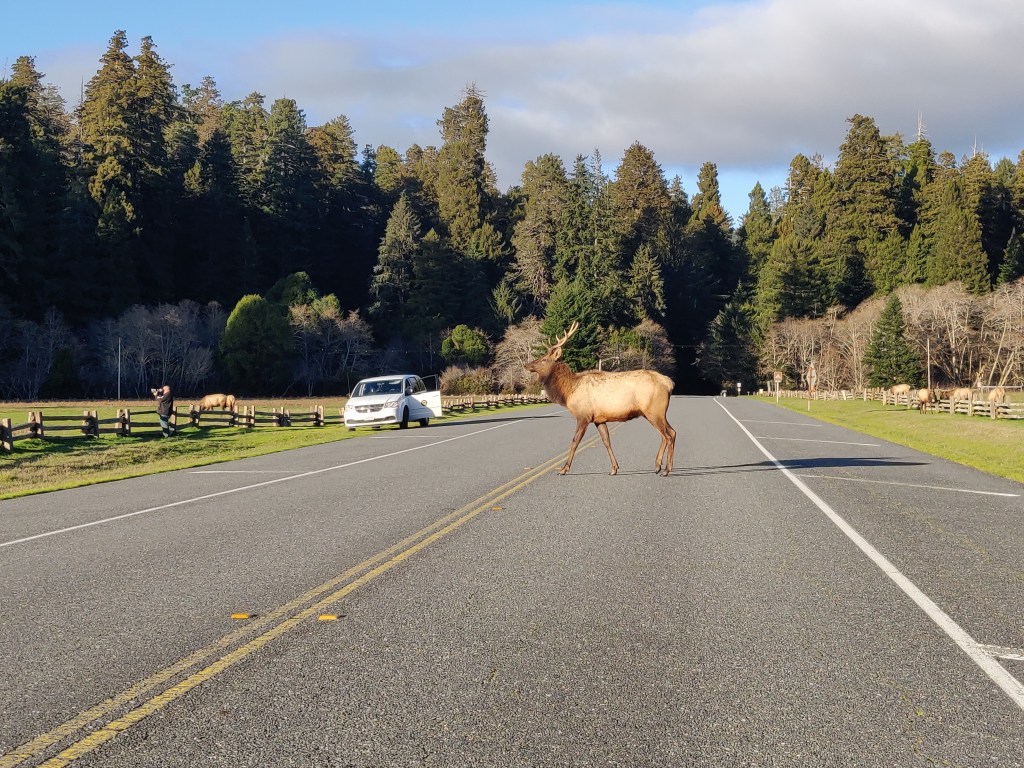
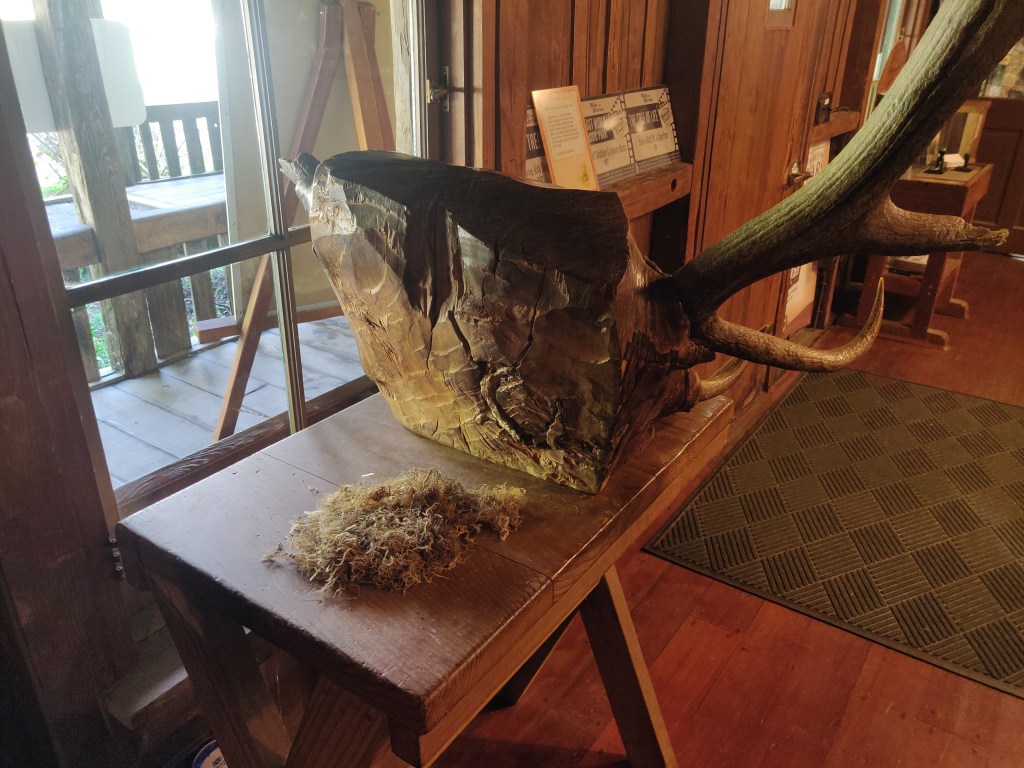
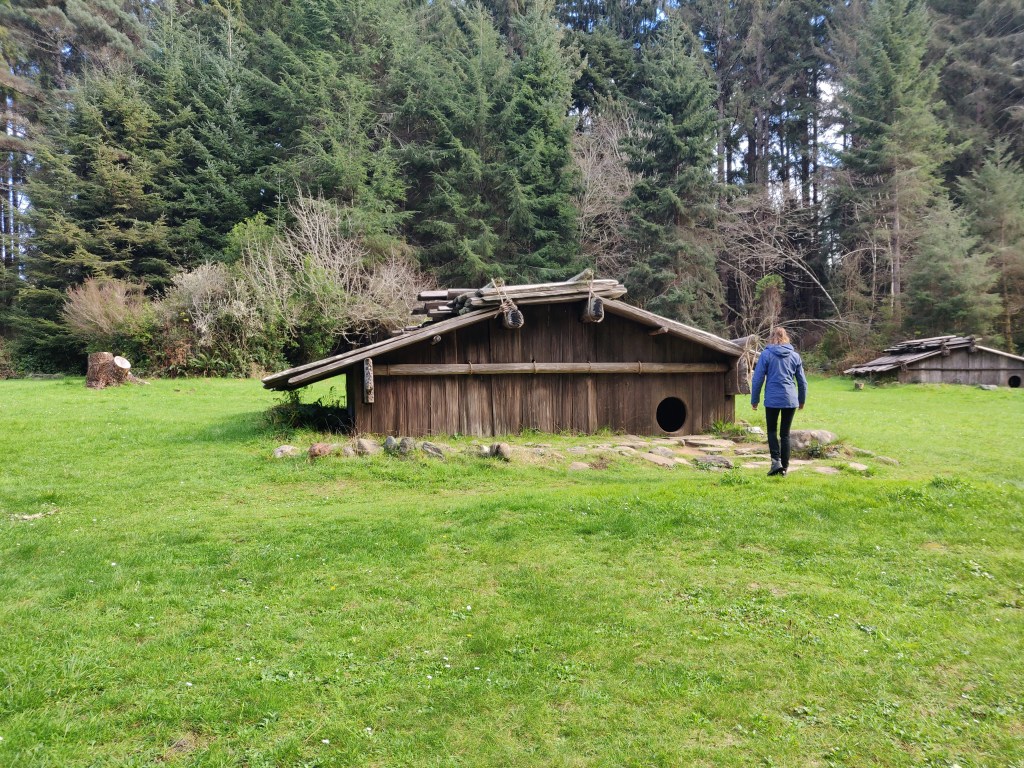
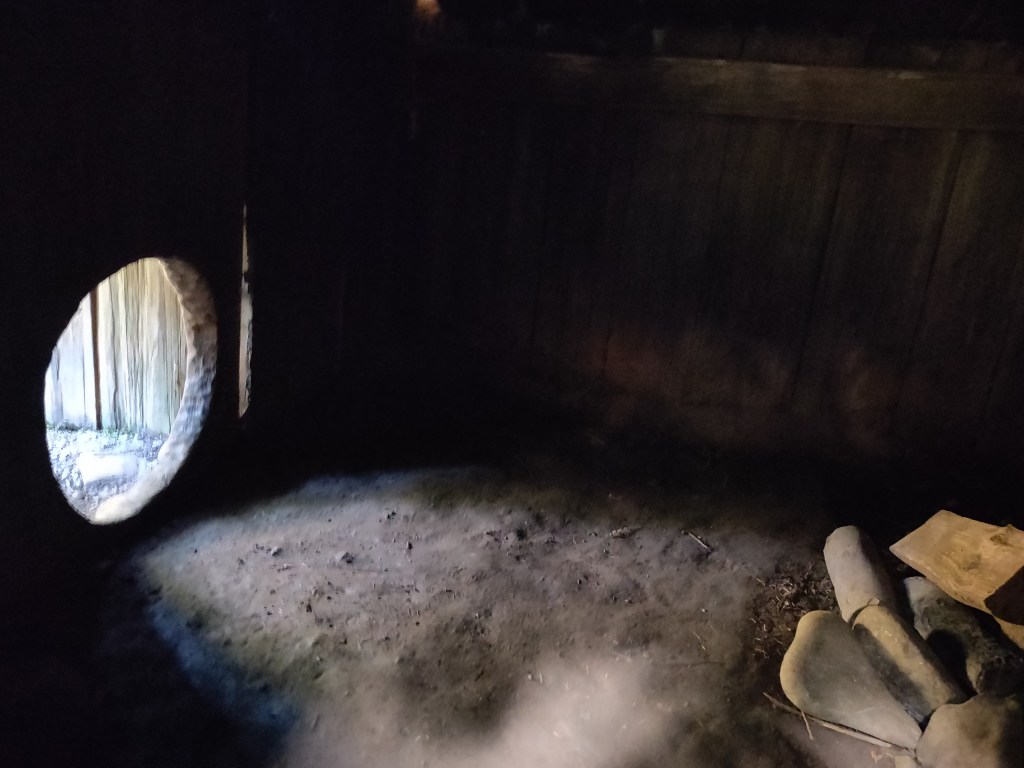
We visited the place where Endor was filmed and stopped in a couple of towns to look at their shops, resisting the urge to buy an assault rifle or sub-machinegun (the fact that we aren’t US citizens was the only thing legally stopping us).

We spent Valentine’s Day in a small motel room where the bathroom sink was next to the kitchen sink. We ate instant noodles cooked with a small cheap kettle we’d cunningly bought to save us from the North American drought of boiling water.

Lewis and Clarke had got to our next destination first (the end of the Columbia river), and had left some nice artifacts and an interesting museum to look at. By this point we had entered the North West of North America, both culturally and biogeographically. This was an important point for me as I’ve always been interested in the transition points between areas of interest. These are areas which define either side and which have a substance of their own which is difficult to pin down. South of here there was an element of the Mediterranean, and north it felt more Boreal. Between the two there must have been something Temperate but in North America changes are more rapid and more impressive, and you can be in another world after what feels only a short distance (by North American standards).
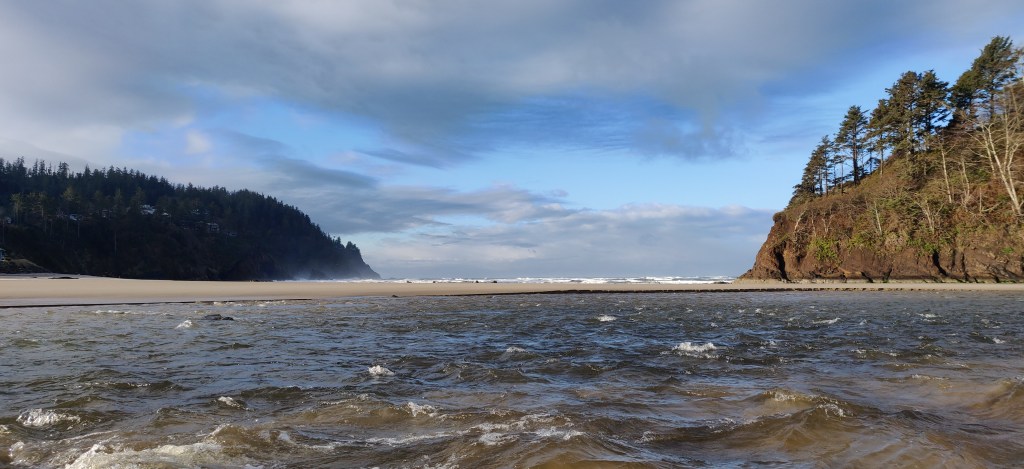
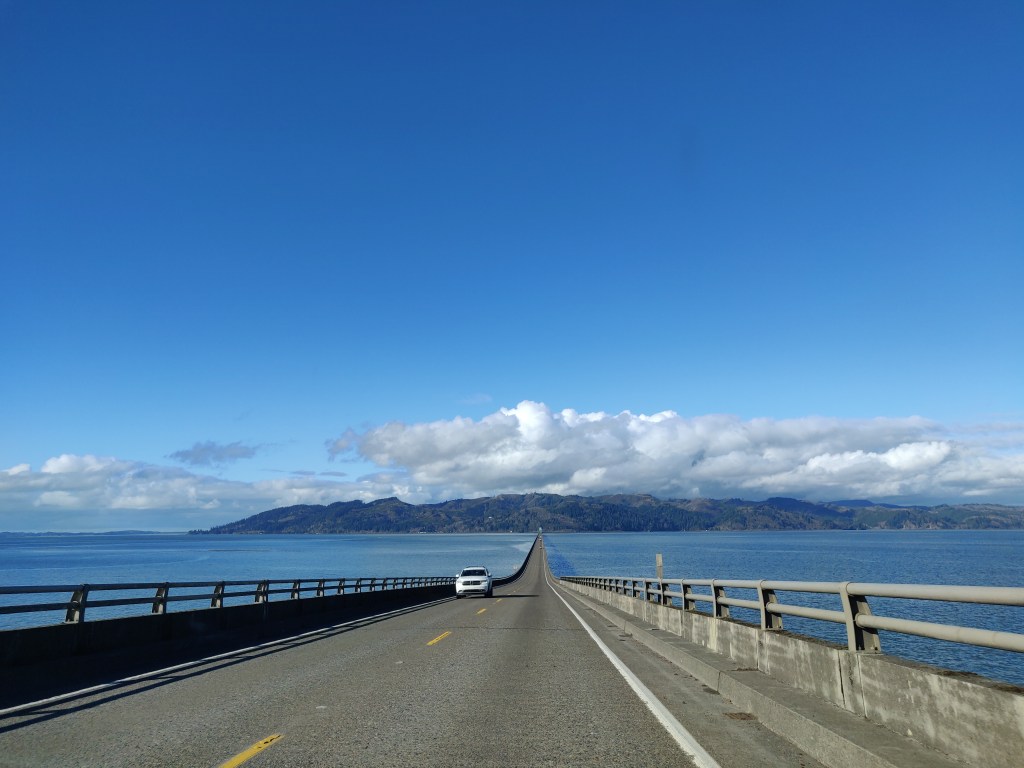
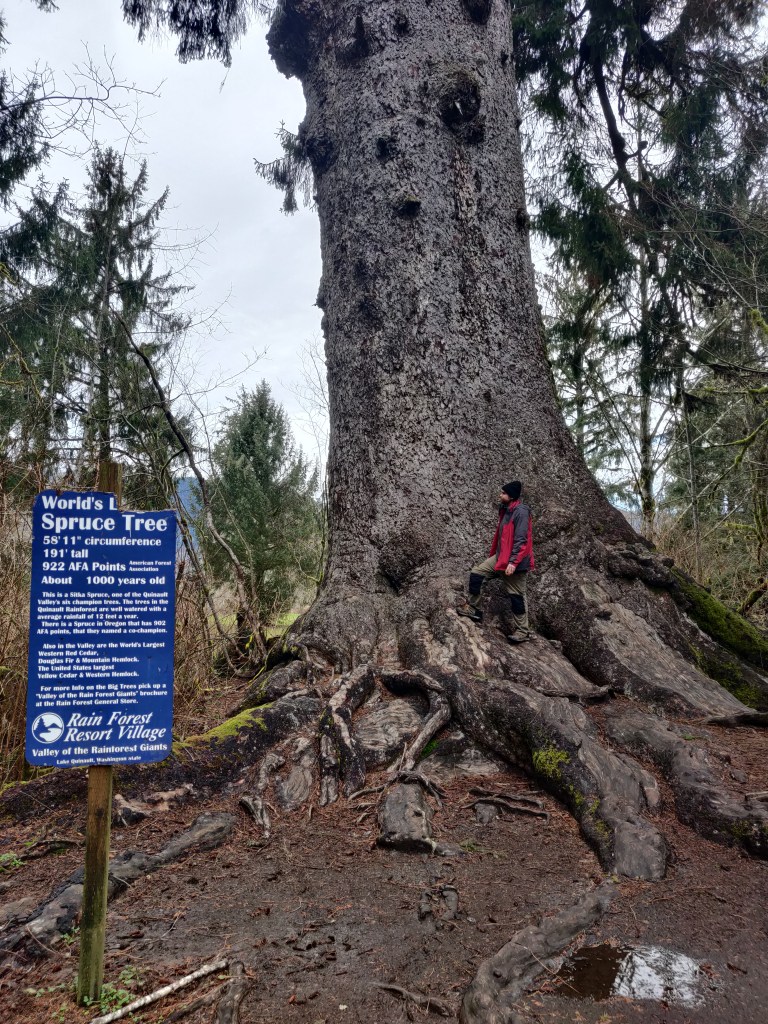
We crossed from Oregon to Washington on an impressive bridge, built to allow dense road traffic to cross over the Columbia while keeping Portland open to international shipping. Washington was even more grey-skyed and coniferous than Oregon. We saw the world’s largest spruce and some interesting trees dealing with erosion on the coast. Another thing in America is the amount of large driftwood here – some of the driftwood trunks we came across would have been record-breaking trees in Europe.
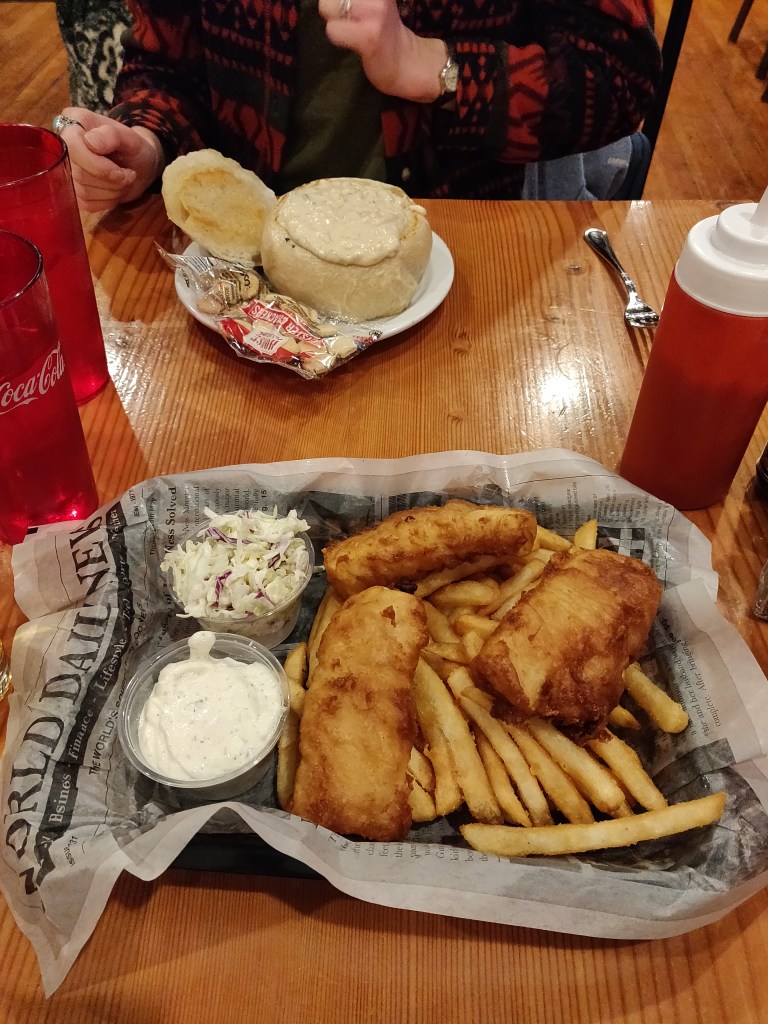
Eventually we arrived in Port Angeles, near to Seattle. We’d collected the car in Los Angeles so there was some symmetry to the journey at least in nomenclature. We had fish and chips and clam chowder, which were both very nice. I left Sarah in town and dropped the car off at the airport. It’s a small airport and only one person worked there. I asked him how I’d get back to the town on foot and he said he was about to shut down the airport and would give me a lift, so once he’d made sure all the day’s flights were landed we drove back to town in his old Subaru.
Early the next morning we crossed into Canada.
 JH Woodcarving